Ornos
Until the 1960s, before the big ferries learned to round Cape Armenistis, anyone wanting to reach Delos would set off from right h...
Updated 8 July 2026
The story
The story of Ornos
The origins of a fishing village
Like most of Mykonos's coastal settlements, Ornos was born as a small fishermen's landing, sheltered from the prevailing winds thanks to the enclosed bay that characterises it. For centuries the island remained a poor, peripheral outpost of the Aegean, passing under Byzantine control, then Venetian with the Duchy of the Archipelago, then Ottoman from the sixteenth century until Greek independence in 1830: a succession of dominations that left lighter traces here than elsewhere, because Mykonos, lacking major resources, never attracted significant investment until the twentieth century. Ornos remained a marginal support point compared with Chora, useful above all for its calm waters, ideal for the mooring of small boats headed toward the sacred island of Delos, not far offshore.
From gateway to Delos to seaside destination
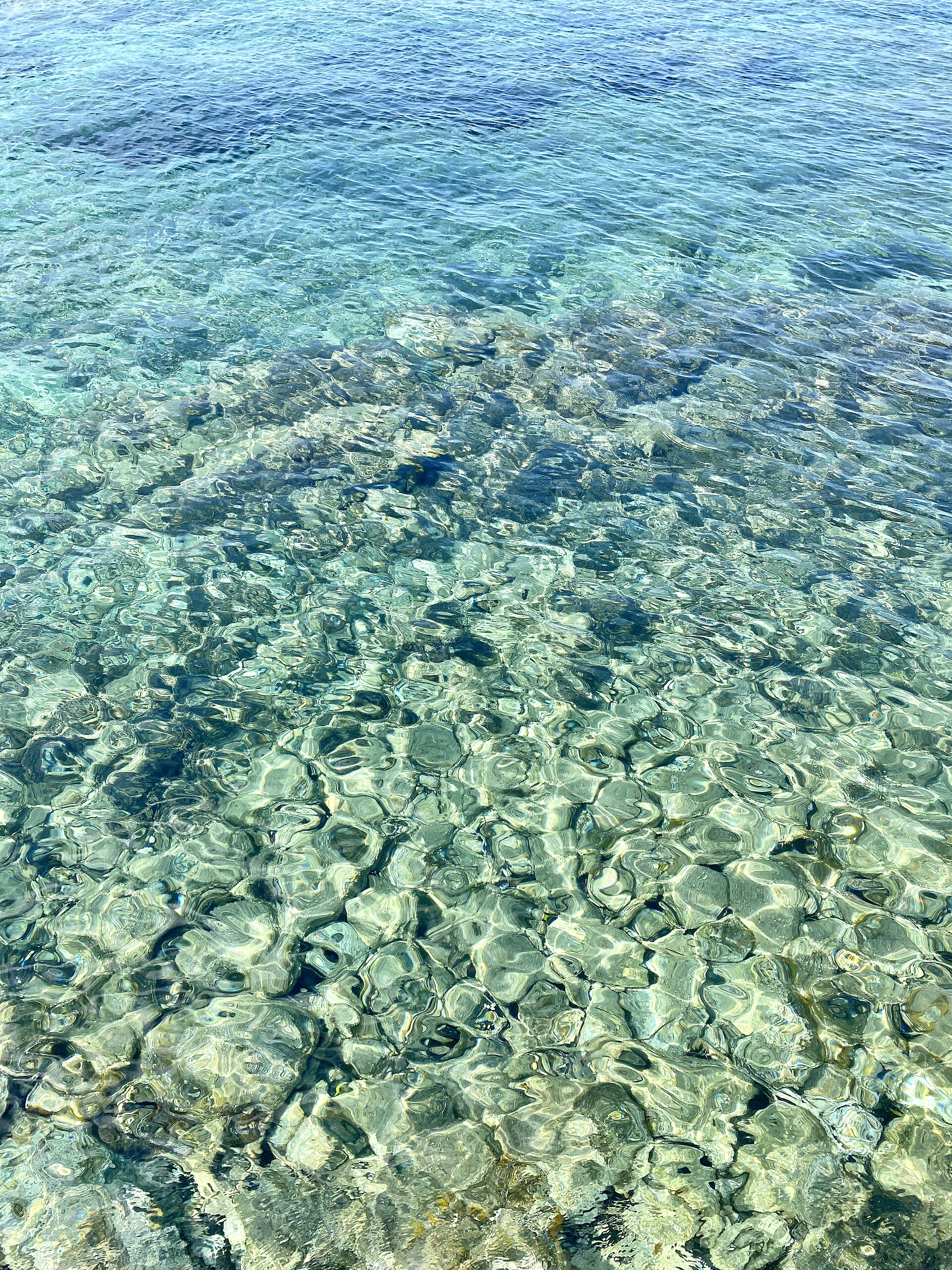
A little-known but fascinating chapter in Ornos's recent history concerns its role as an embarkation point for Delos, the sanctuary island dedicated to Apollo and Artemis, a UNESCO World Heritage site. Before the port of Mykonos Town was equipped for mass tourist connections, it was often Ornos's fishermen who ferried the first visitors to the archaeological excavations, at a time when the island was timidly beginning to open up to international tourism thanks to its discovery by artists and travellers in the 1950s and 1960s. Since that pioneering season Ornos has gone through a gradual transformation: from a service landing to a residential and tourist village, while keeping a lower-key profile than the fashionable explosion of Chora and Psarou.
The bay and the beach of Ornos
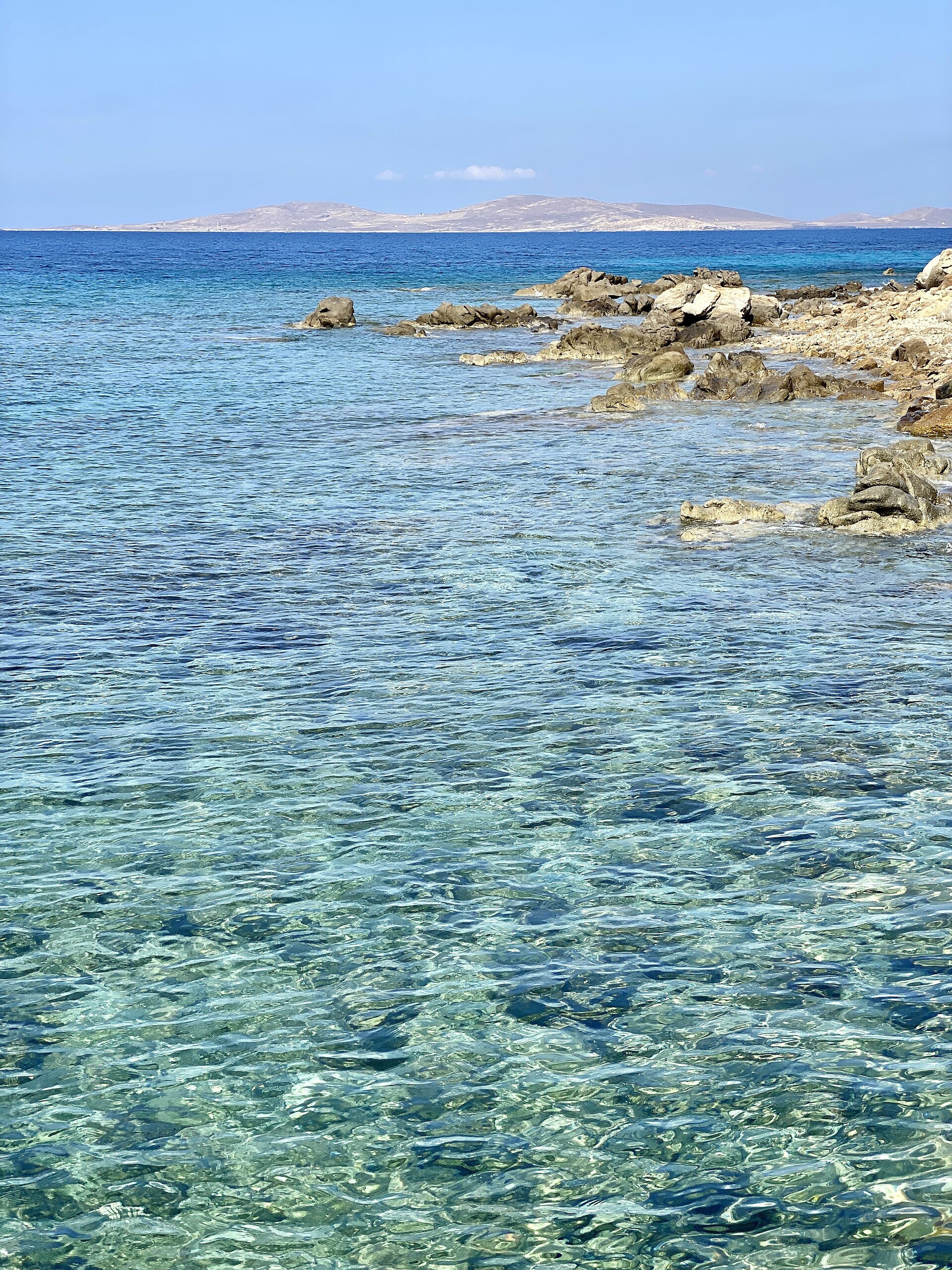
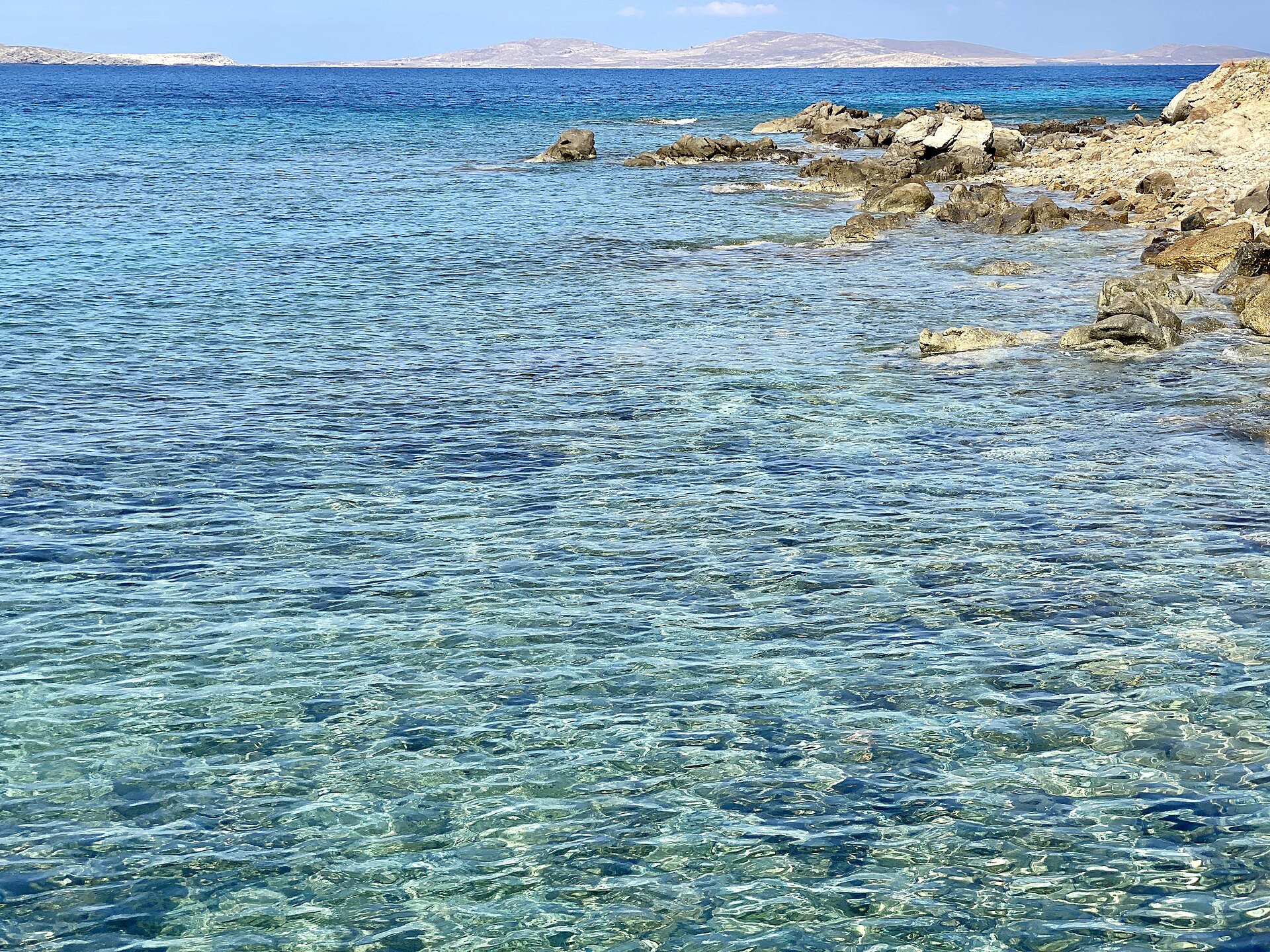
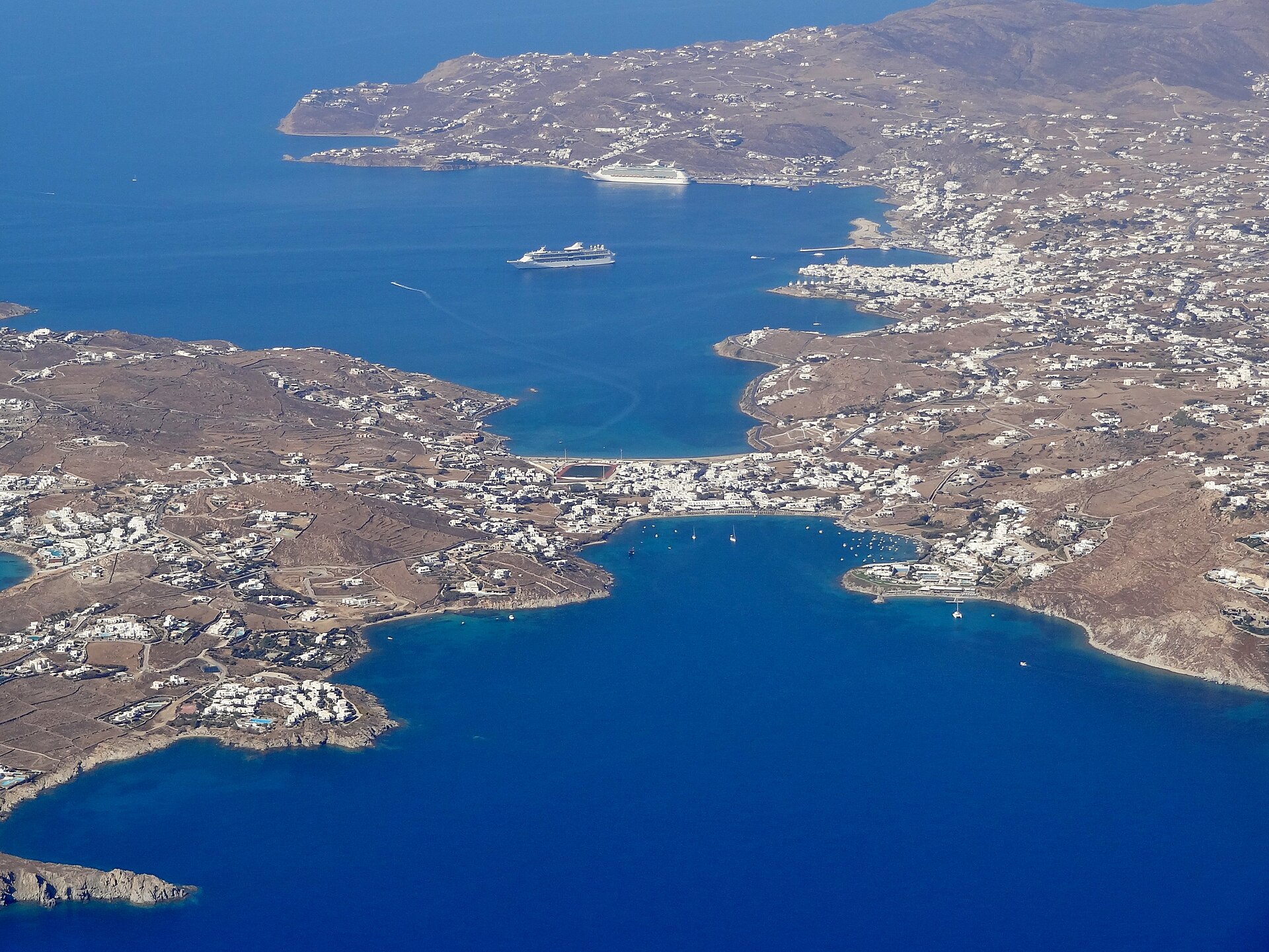
The heart of the Ornos experience remains its beach: an arc of golden sand about 400 metres long, enclosed in a deep bay that shelters it almost completely from the meltemi, the northern wind that in summer lashes many of the island's other coasts. This sheltered position keeps the waters particularly calm and the seabed shallow for a long stretch, features that over time have made Ornos one of the favourite beaches for families with small children, as well as, in the past, a reference point for the island's windsurfing school, now largely replaced by lighter water sports such as paddleboarding and kayaking. Along the shore, stretches of free sand alternate with organised establishments offering sun loungers, umbrellas and bar service.
The little harbour and waterfront life
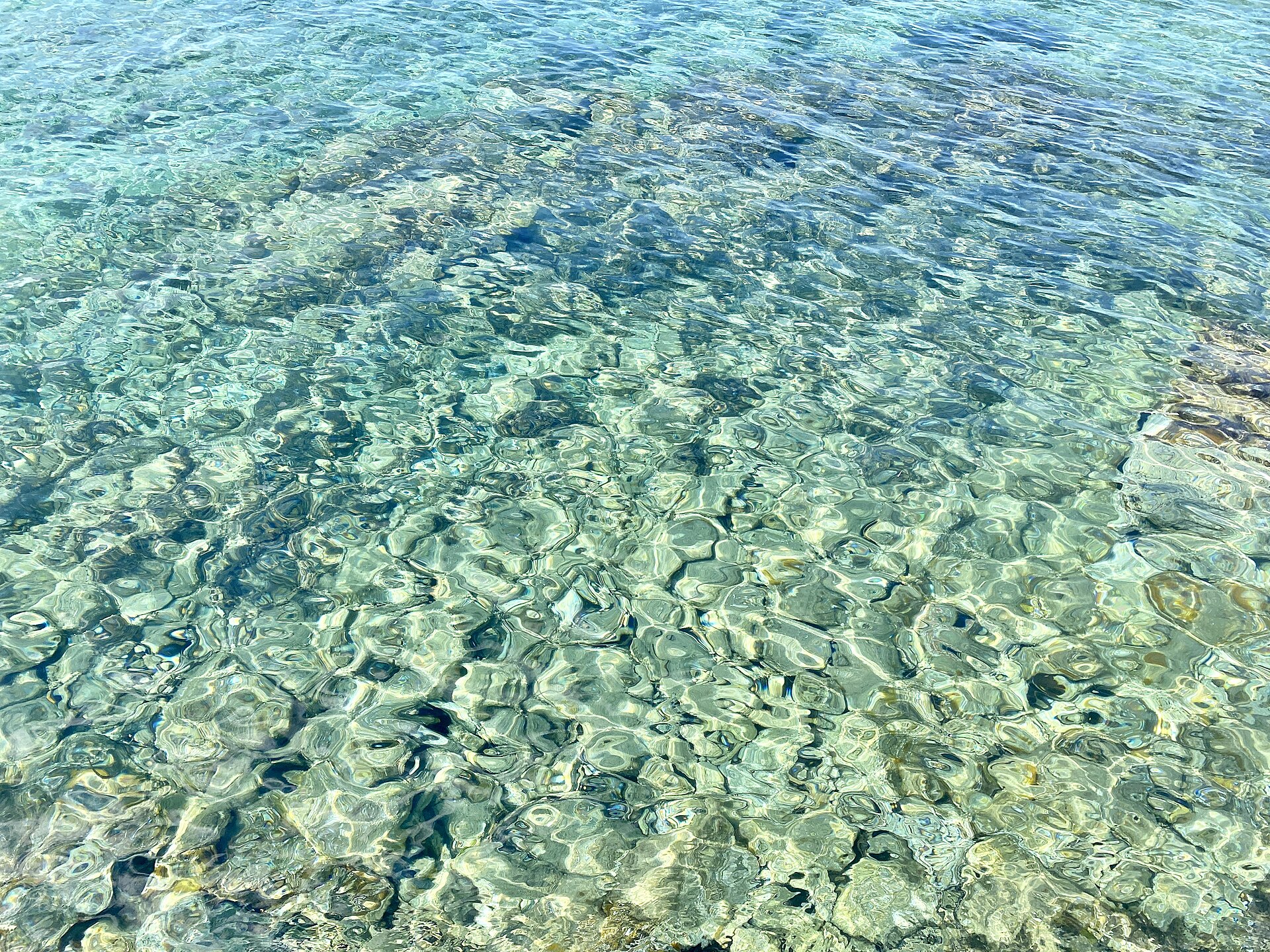
At one end of the bay the small fishing port that gave rise to the village still survives: a few boats painted blue and white, nets spread out to dry, the occasional cat in search of fish scraps. Around this nucleus the seafront promenade has developed over the years, today dotted with taverns and restaurants that bring the day's catch to the table, often chosen directly from the counter at the entrance to the establishment. It is one of the most authentic corners of the island's south coast: dinner here, with the harbour lights reflected on the water, gives a more genuine atmosphere than the glossy venues of Psarou, without sacrificing the quality of the cuisine.
Psarou and Platis Gialos, the nearby beaches
A few minutes on foot or by car from Ornos are two of Mykonos's most famous beaches. Psarou, a small cove of fine sand, is known for the Nammos beach club and for being a regular destination for celebrities and the international jet set, with prices and style to match. Platis Gialos, larger, is instead one of the island's main beach hubs: from here depart the caiques that link the southern beaches, from Paranga to Paradise, from Super Paradise to Elia, making it possible to build a small beach-to-beach itinerary by sea in a single day, a habit widely practised by visitors staying in the Ornos area.
Chora within easy reach
One of the most concrete advantages of staying in Ornos is its proximity to Mykonos Town, the main town also known as Chora, just three kilometres away. From Ornos you can reach in a few minutes the white alleys of the historic centre, the row of windmills on the Kato Myli hill, the Little Venice quarter with its houses looking straight out over the sea, and the church of Panagia Paraportiani, one of the most photographed religious buildings in the Cyclades for its layered architecture, the result of several chapels built at different times being joined together. This proximity makes it possible to enjoy Chora's lively evenings without necessarily having to stay overnight amid the full pedestrian traffic of the centre.
Landscape and hinterland
The landscape around Ornos tells the essence of the Cyclades: bare hills crossed by dry-stone walls that once marked out cultivated plots, sparse olive groves, broom and wild caper that in spring colour the uncultivated land yellow. The traditional architecture, made up of white cubic volumes, small blue-domed churches and windmills scattered across the heights, blends with the new tourist buildings, often designed respecting the same aesthetic codes. The most striking contrast remains that between the intense blue of the Aegean Sea and the dazzling white of the buildings, heightened by the very strong light that characterises the Cycladic summer.
Traditions, cuisine and local flavours
Ornos's cuisine, like that of all Mykonos, revolves around fresh fish and seafood, often served grilled with nothing more than olive oil, lemon and oregano. There is no shortage of the island's signature dishes, such as kopanisti, a spicy fermented cheese spread on bread, louza, dried pork cured with spices, and traditional sweets such as amygdalota, almond biscuits linked to religious festivities. The taverns of the little harbour still keep up the habit of offering a menu based on the day's catch, a direct link to the seafaring vocation that gave rise to the village.
Sunset life
Ornos, facing west, offers spectacular sunsets over the bay, a moment of the day that locals and the most devoted visitors often prefer to the more celebrated but crowded sunsets of Little Venice in Chora. It is the hour when the beach bars switch on their soft lighting, the music turns down and the tables of the seafront restaurants begin to fill for dinner, in a natural passage from the daytime beach rhythm to the more sociable evening one, without ever reaching the decibels of the evening venues in the centre.
When to go
Ornos's tourist season, like that of all Mykonos, is concentrated between May and September, with the peak in visitors and temperatures in July and August, when the meltemi blows more steadily, making the bay's natural shelter especially precious. June and September offer an ideal compromise between warm weather, still-pleasant sea and a smaller crowd, with generally more affordable prices. In winter the village empties out almost completely, returning to the quiet of a small local settlement, while many tourist businesses stay closed until the following spring.
Experiences not to be missed
- Dinner of fresh fish at a tavern on Ornos's little harbour, choosing the catch directly at the counter
- A day of relaxation on Ornos's sheltered beach, ideal even with small children thanks to its shallow waters
- A caique excursion along the southern beaches, from Platis Gialos to Paradise and Super Paradise
- An evening stroll to Psarou for a drink at one of the island's most exclusive beach clubs
- A visit to Chora, just minutes from Ornos, for the windmills, Little Venice and the church of Panagia Paraportiani
- A boat trip to Delos, a UNESCO World Heritage archaeological site just off the coast
FAQ
Come si raggiunge Ornos da Mykonos Town?
Ornos è adatta alle famiglie con bambini?
Dove si parcheggia a Ornos?
Quanto tempo dedicare a Ornos?
È vicina all'aeroporto di Mykonos?
Si può raggiungere Delos da Ornos?
Getting there
- Aeroporto Internazionale di Mykonos (JMK), circa 4 km da Ornos
- Da Mykonos Town si segue la strada costiera verso sud in direzione Platis Gialos/Psarou; il tragitto richiede pochi minuti in auto, taxi o scooter.
- In alta stagione la strada verso le spiagge del sud può essere trafficata: negli orari di punta conviene usare gli autobus locali o spostarsi via mare con i caicchi che collegano le spiagge.
Perfect for
Baia riparata, sabbia fine e acque calme, tra le spiagge più adatte a famiglie e bambini dell'isola.
Taverne sul porticciolo con pesce fresco scelto al banco e piatti tipici come kopanisti e louza.
A un passo da Psarou e dai beach club più esclusivi delle Cicladi, oltre alla movida di Chora.
Base ideale per escursioni in barca all'isola sacra di Delos e per visitare i monumenti di Mykonos Town.
Tramonti sulla baia e ritmo più tranquillo rispetto al centro, per chi cerca Mykonos senza il caos del centro.