Ano Mera
While Mykonos's Chora dances frantically to the rhythm of international glamour and sunsets sipped in cocktail bars, another Mykon...
Updated 7 July 2026
This season · July · Summer
What to do in Ano Mera now
The story
The story of Ano Mera
A History of Resistance and Devotion
The origins of Ano Mera are lost to the centuries, but its development is closely tied to the need for protection from pirate raids that plagued the Aegean coasts for centuries. While coastal centers were vulnerable, the interior offered shelter and fertile land for agriculture. During the 13th century, with the arrival of the Venetians led by the Gyzis family, the area assumed fundamental strategic importance. Under Venetian rule, the settlement consolidated around fortified structures and monasteries, becoming the island's granary. The history of Ano Mera is therefore a narrative made of toil in the fields and prayer, a dualism that allowed the community to maintain unique social cohesion, even during the centuries of Ottoman rule, when privileges granted to local religious institutions allowed the preservation of the Greek language and traditions.
The Monastery of Panagia Tourliani
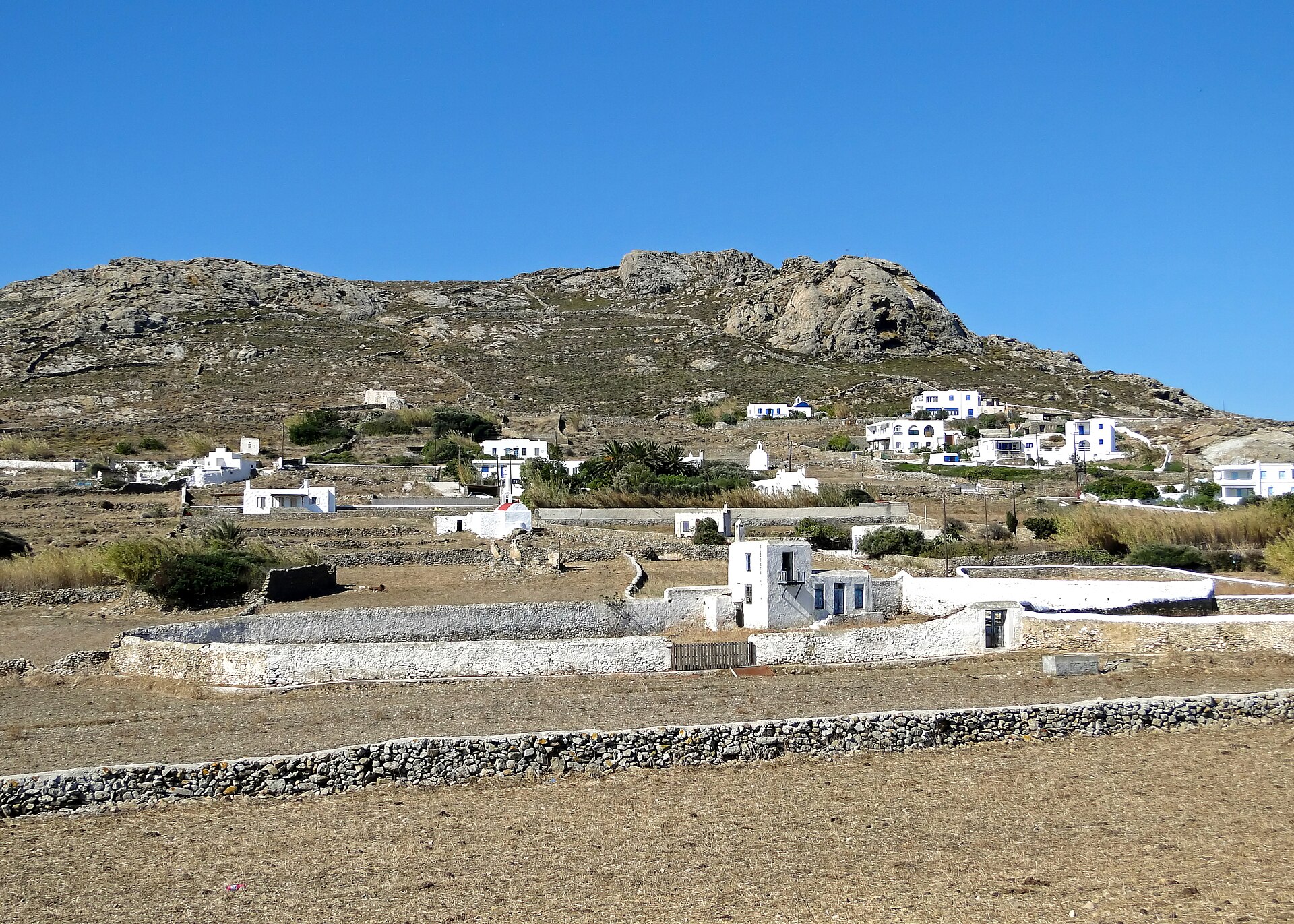
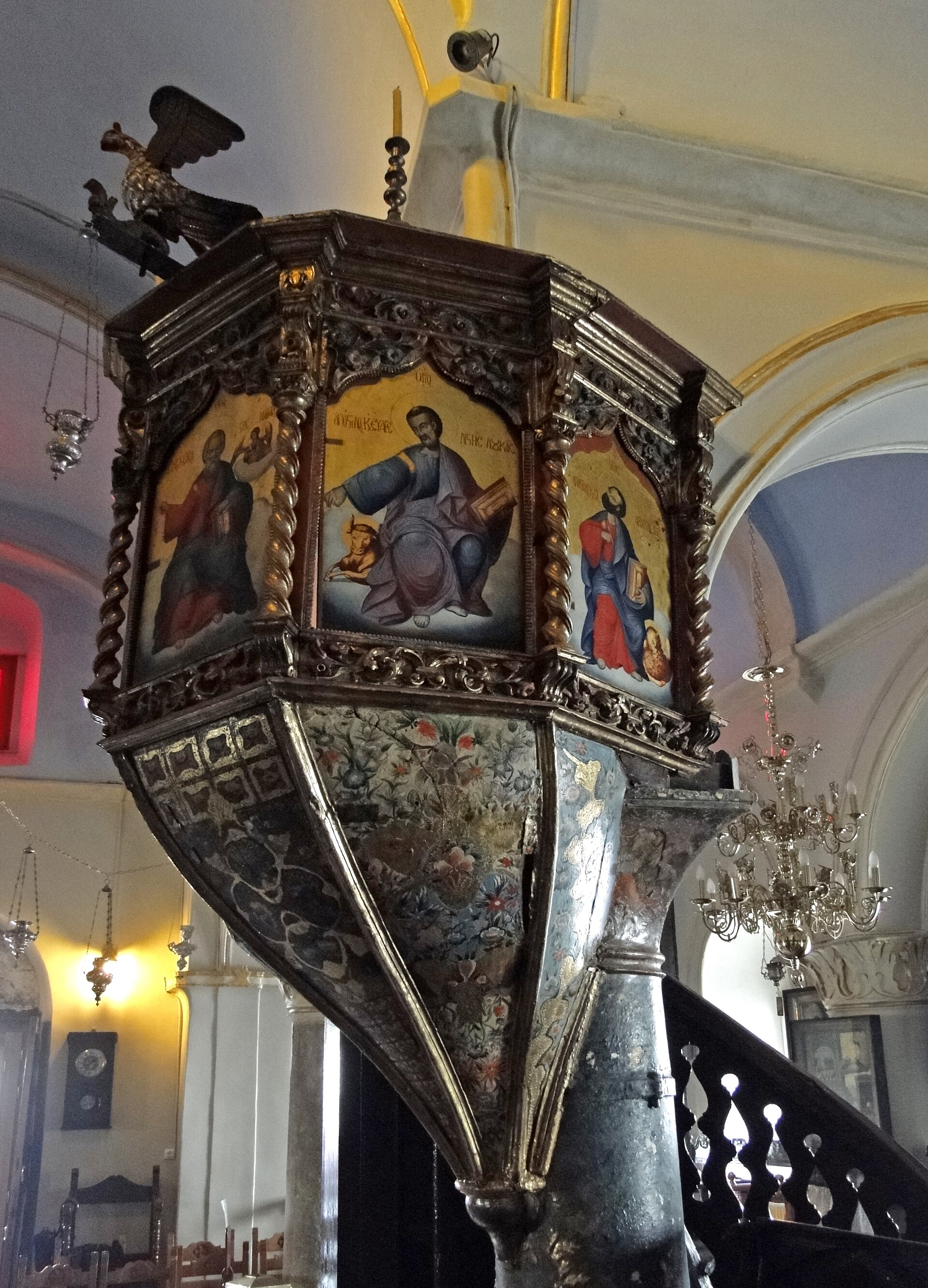
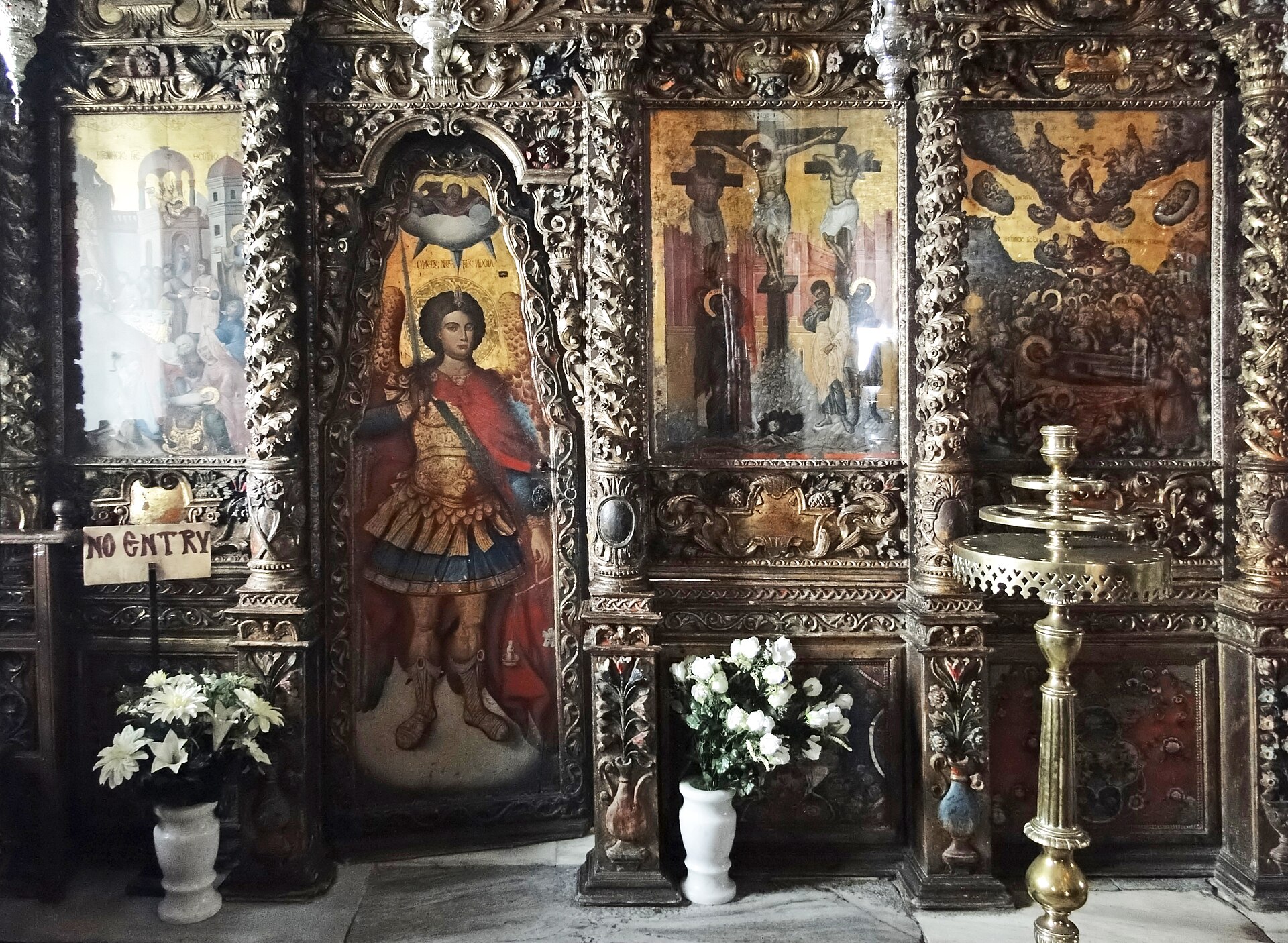
The true spiritual and architectural focal point of Ano Mera is the Monastery of Panagia Tourliani, originally founded in 1542 by two monks from Paros. The building we admire today is the result of an important restoration that took place in 1767, which gave it its current imposing and refined appearance. What immediately strikes the visitor is the white marble bell tower, finely carved, that rises against the blue sky. Inside, the monastery houses an invaluable treasure: a Baroque wooden iconostasis, crafted in Florence in the 18th century. This masterpiece, rich in gilded details and biblical scenes, testifies to the close cultural ties between the Cyclades and the West. The small attached museum preserves sacred vestments, Byzantine icons, and the monastery's original bells, offering deep insight into the faith that has animated this place for nearly five centuries.
The Ruins of Paleokastro and Its Monastery
On a hill dominating the village rise the vestiges of Paleokastro, the ancient Venetian fortress built by the Gyzis brothers in the 14th century. This archaeological site, though today reduced to a few remaining walls, recounts the era when Mykonos was a Venetian fief. Next to the castle ruins stands the Monastery of Paleokastro, an 18th-century structure that perfectly embodies Cycladic monastic aesthetics: squared volumes, white lime, and a simplicity that invites meditation. The complex is surrounded by harsh, stony landscape, where the wind blows constantly between ancient stones. From here, the view spans much of the island, allowing one to understand why this place was chosen as a privileged observation point against threats from the sea.
The Central Square: the Social Heart
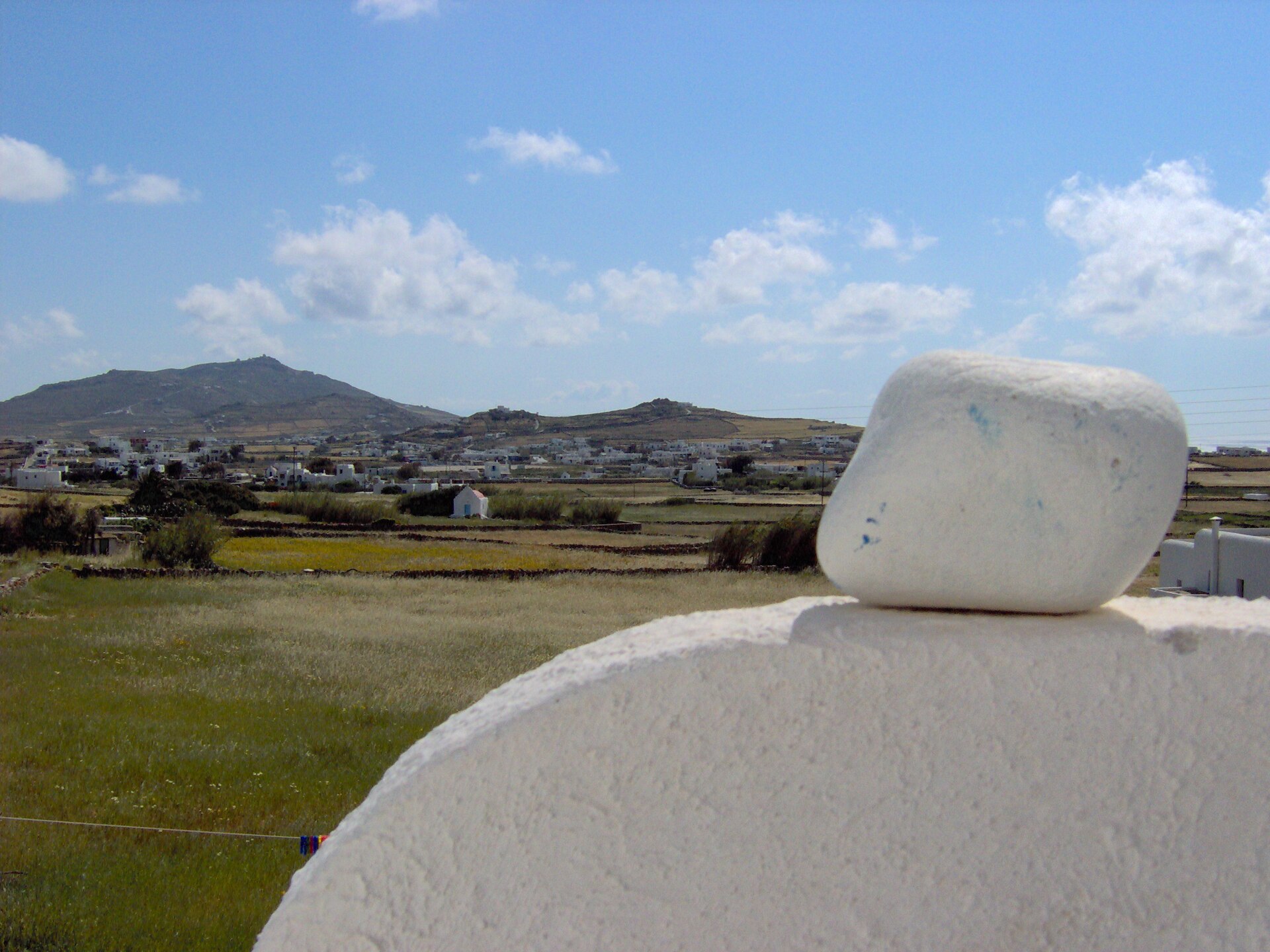
Life in Ano Mera gravitates around its large stone-paved square, one of the few public spaces of this kind on the island. Unlike the Chora, where squares are intimate and hidden, here the space is ample and airy, surrounded by traditional tavernas, cafés, and small artisan shops. It is the meeting place par excellence: under the porticoes or in the shade of the trees, inhabitants gather to discuss the harvest or local politics. Sitting at one of the outdoor tables allows one to observe the most authentic Greek daily life, far from the rhythms of hit-and-run tourism. The square is also the natural stage for religious celebrations and popular festivals, moments when the entire village reunites to share food, music, and traditional dances, keeping alive a sense of community that is disappearing elsewhere.
Landscape and Nature: the Wild Interior
The landscape surrounding Ano Mera is a hymn to the resilience of Cycladic nature. Far from equipped beaches, the interior presents itself as a mosaic of granite hills, arid valleys, and small plots of land cultivated with tenacity. The vegetation consists mainly of Mediterranean scrub, aromatic herbs such as thyme and oregano that perfume the air, and majestic prickly pears. Walking along the paths that depart from the village, one discovers ancient farmhouses (the 'choria') with their wood-fired ovens and stone stables. It is an environment dominated by the Meltemi, the north wind that shapes rocks and refreshes summer days. This apparently inhospitable nature hides a crude and poetic beauty, made of contrasts between gray stone, white rural chapels, and the intense blue of the horizon.
Traditions and Flavors: Mykonos's Pantry
Ano Mera is universally recognized as the island's gastronomic capital, the place where flavors have remained faithful to grandmothers' recipes. Cheese production is the village's pride: here is produced the celebrated Kopanisti, a PDO cheese with creamy consistency and sharp, decisive flavor, perfect for spreading on barley bread (paximadi). Another undisputed protagonist is the Louza, a spiced pork sausage aged in the wind, often compared to prosciutto but with a distinctly Aegean character. In the butcher shops and tavernas of the square it is possible to taste also local sausages flavored with pimento and wild fennel. Not lacking are sweets, such as amigdalota (almond biscuits) and melopita, a cake made with tyrovolia cheese and honey that contains in a single bite all the sweetness of the Cyclades.
Nearby Beaches: the Sea a Few Steps Away
Although located inland, Ano Mera serves as an ideal base for exploring some of the most beautiful and least chaotic beaches on the eastern and southern coasts of Mykonos. A short distance away are the bays of Kalafati and Agia Anna, paradises for windsurfing enthusiasts and those seeking tranquility. A bit further is the splendid Kalo Livadi beach, with its crystal-clear waters and shallow bottoms, ideal for families. For those seeking an even wilder experience, the beach of Lia offers a quiet refuge surrounded by spectacular rocks, perfect for snorkeling. These seaside locations maintain a visual connection with the village, remaining easily accessible while offering a more relaxed alternative to the celebrated and crowded beaches of the western coast.
- Visit the Museum of the Monastery of Panagia Tourliani to admire the Florentine iconostasis.
- Taste the Kopanisti and Louza in one of the historic tavernas on the square.
- Climb Paleokastro hill at sunset for a panoramic view of the island.
- Participate in the August 15th festival, the community's most cherished celebration.
- Hike along the rural paths that connect the village to the beaches of Lia or Kalafati.
- Buy local products directly from farmers in the small shops of the center.
When to Visit and How to Experience the Place
To fully enjoy the magic of Ano Mera, the ideal period is spring (May and June) or early fall (September and October). In these months the temperatures are pleasant, nature is lush or golden, and the village breathes its usual calm, far from the peaks of August tourism. Visiting Ano Mera on Sunday morning allows you to attend religious services and see the village at its moment of greatest social vitality. It is advisable to dedicate to this locality at least half a day, preferably concluding the visit with a long and relaxed lunch in the square. For those staying in the Chora, Ano Mera represents the perfect escape for a different evening, dining under the stars in an authentically Greek atmosphere that refreshes the soul as much as the body.
FAQ
Come si arriva ad Ano Mera dalla Chora?
È un luogo adatto alle famiglie con bambini?
Quanto tempo occorre per visitare il villaggio e il monastero?
Ci sono problemi di parcheggio?
Il monastero ha un codice di abbigliamento?
Getting there
- Aeroporto di Mykonos (JMK) - circa 6 km
- Non presente (servizio bus locale KTEL attivo)
- Seguire la strada principale che attraversa l'isola da ovest verso est, ben segnalata dalla Chora verso l'interno.
- Noleggiare uno scooter o un'auto è il modo migliore per esplorare anche le spiagge selvagge nei dintorni del villaggio.
Perfect for
Il monastero di Panagia Tourliani è uno dei centri religiosi più importanti delle Cicladi, ideale per chi cerca arte sacra e silenzio.
Meta imprescindibile per i buongustai che vogliono scoprire i veri sapori miconiani come la Louza e la Kopanisti.
Perfetto per chi vuole fuggire dalla vita notturna e immergersi nel ritmo lento di un vero villaggio greco.
To see